Address
304 North Cardinal
St. Dorchester Center, MA 02124
Work Hours
Monday to Friday: 7AM - 7PM
Weekend: 10AM - 5PM
Address
304 North Cardinal
St. Dorchester Center, MA 02124
Work Hours
Monday to Friday: 7AM - 7PM
Weekend: 10AM - 5PM

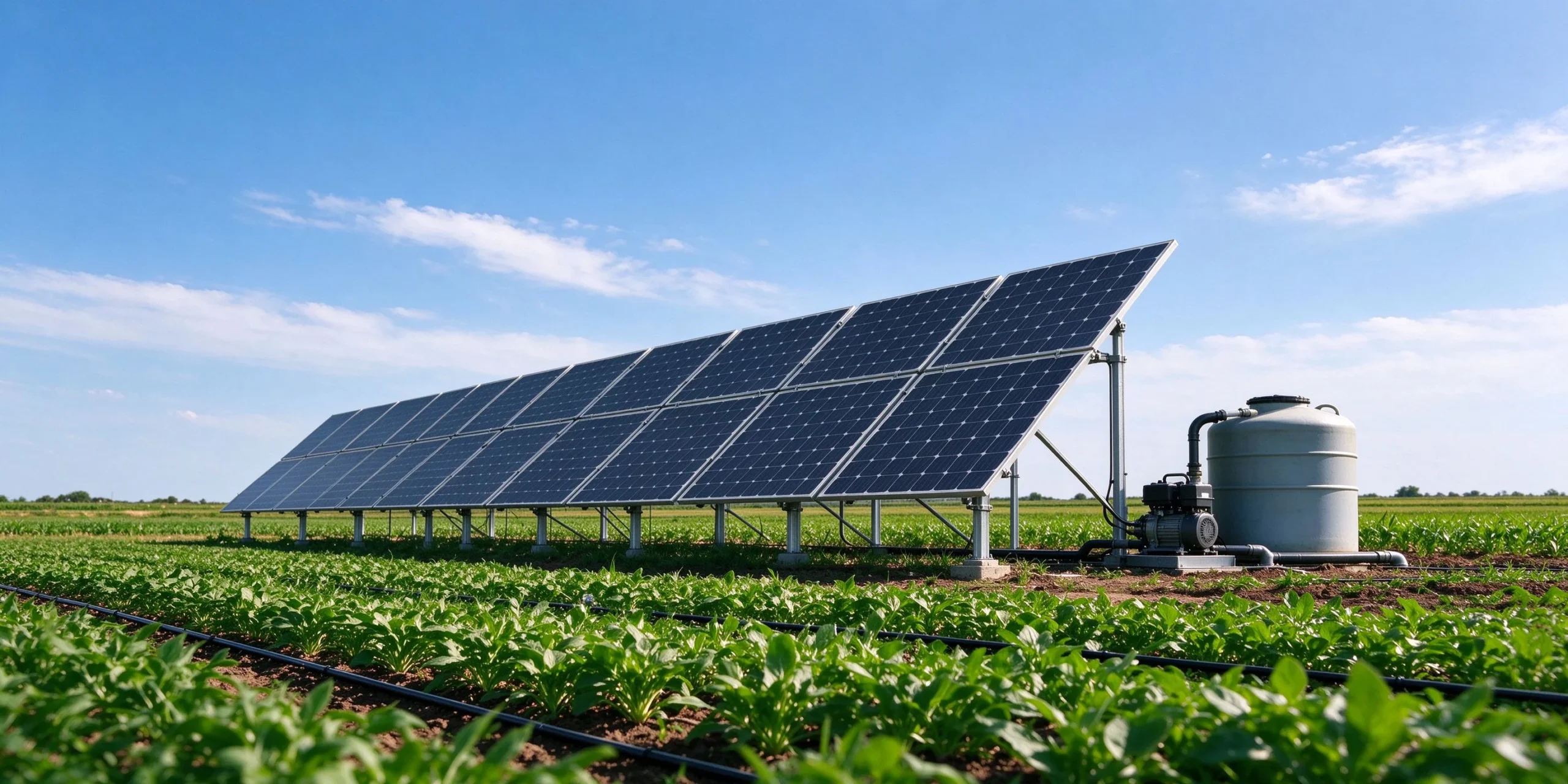
A solar agricultural water pump system turns sunlight into irrigation water without grid electricity or fuel. Six essential parts make up the complete system: solar panels, a pump controller, the pump itself, cables, piping, and the water source.
Each component must be matched to the others, because a weak panel or an undersized controller limits the whole system. This guide explains each part, how the parts work together, and the data you need to collect before you choose a system for your farm. The list below works for boreholes, ponds and open-channel irrigation alike.
| Component | What It Does | Selection Note |
| Solar PV panels | Convert sunlight into DC power | Size for pump power and local sunlight hours |
| MPPT controller | Converts panel DC into motor voltage; protects against low voltage, overcurrent and dry running | MPPT type draws more power in weak light |
| Pump | Lifts water from source to field | Submersible for deep wells; surface type for shallow sources |
| Cables and connectors | Carry current to the motor | Size for current; keep joints waterproof |
| Piping and fittings | Deliver water to field or tank | Diameter and length affect friction head |
| Water source and storage | Supply and buffer water | Tank lets you pump in sun, irrigate anytime |
A complete system is sold as a kit or as separate items, and every supplier lists the same core parts:
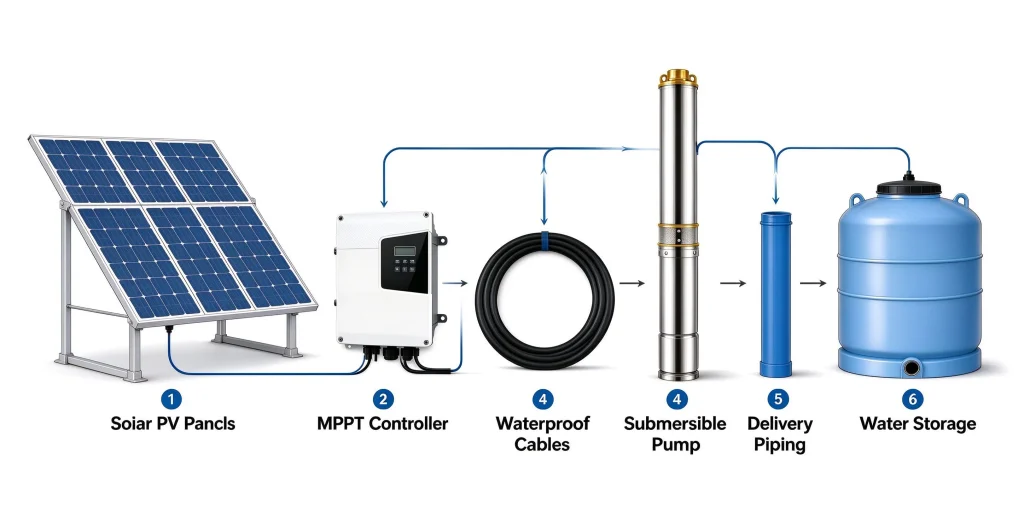
Every solar agricultural water pump system follows the same energy path. Panels generate DC electricity from sunlight; the controller converts it to the voltage and frequency the pump motor needs and protects the system from low voltage, overcurrent and dry running; the pump then lifts water through the piping to the field or tank.
The controller also shows fault codes, which makes field diagnosis faster when something goes wrong. In a typical layout, the panels stand near the pump or on the field edge, tilted to the local latitude for maximum output. The panel angle can be adjusted seasonally to keep output high.
This is why solar water pumps for agriculture are supplied as complete systems rather than single machines: matched parts work reliably, while mismatched parts fail early.
The Food and Agriculture Organization (FAO) describes solar powered irrigation as a climate-friendly and affordable option for agriculture, and stresses that these systems need adequate management to stay reliable.
Choose a solar pump for agriculture by three numbers: the required flow in litres per hour, the total head (well depth plus pipe friction), and the sunlight hours at your location. Size the panels for the worst season, not the average one, so the pump still starts on short winter days.
A submersible pump with an MPPT controller is the standard choice for deep wells; a surface pump suits shallow sources and open water. If the water level changes between seasons, pick a model whose operating range covers both conditions.
Most suppliers publish flow-head tables for each model, so compare your operating point against the table before you buy. Adding storage on site gives you the flexibility to irrigate outside the sunniest hours. If in doubt, choose a larger storage tank rather than a larger pump.
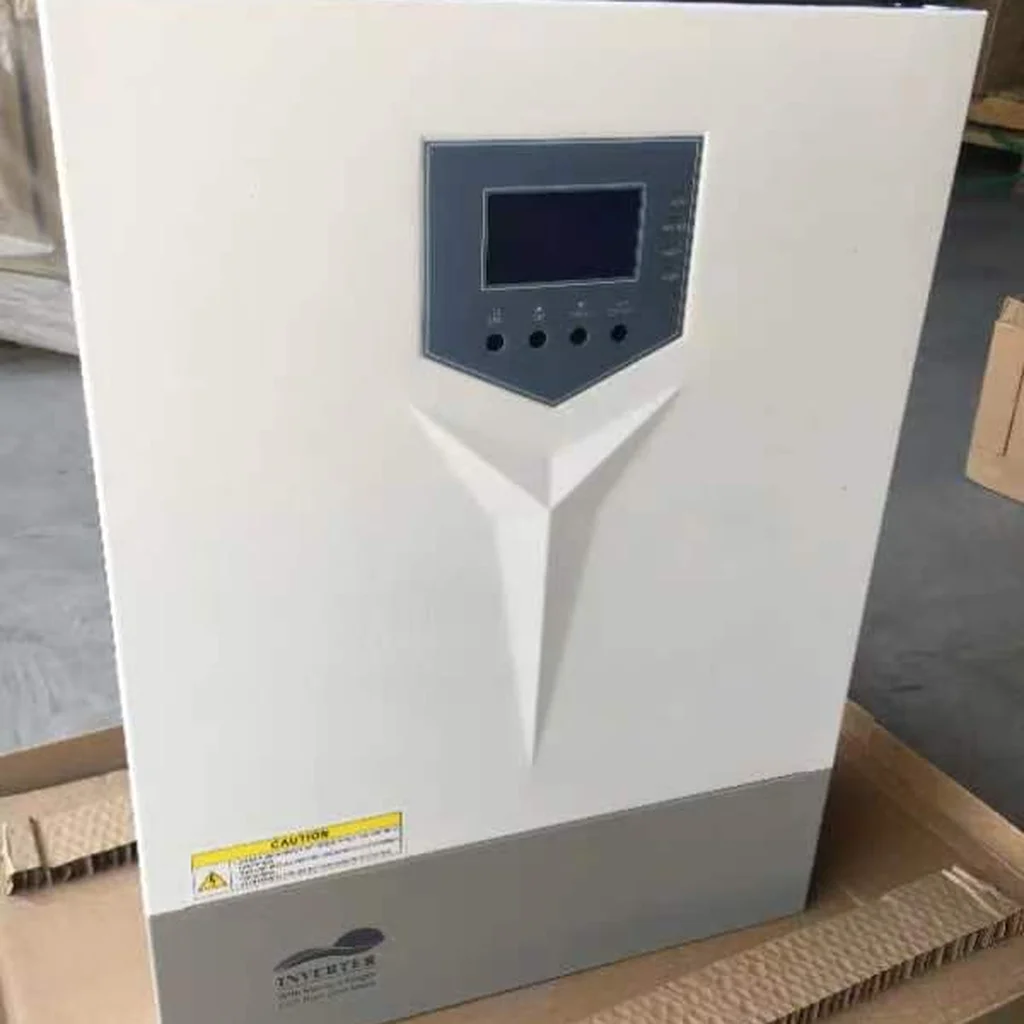
A solar agricultural water pump system is only as strong as its weakest part. A poor controller shortens pump life, and undersized cable wastes solar output. Both failures show up in the first months, not after years.
At our factory, every HUOPUSOLAR pump is tested in a professional performance laboratory equipped with hydraulic performance test benches, pressure endurance testers and insulation resistance testers before delivery.
The 4SC-PV150 solar pump, for example, uses an IP65-rated MPPT inverter, carries CE and ISO9001 certification and is covered by a two-year warranty. OEM support is available for custom irrigation projects, and spare parts such as seals and impellers can be ordered with the first batch.
What size solar pump do I need for my farm?
Size the pump by two numbers: the required flow in litres per hour and the total head (well depth plus pipe friction losses). A typical smallholder farm with a 50 m well and 2,000–5,000 L/h demand uses a 1.1–1.5 kW submersible pump. If you are unsure, ask your supplier for a flow-head table and match your operating point on it.
How many solar panels are needed for a water pump?
Panel wattage is matched to the pump motor rating with a 1.2–1.5x safety margin. A 1.5 kW pump typically needs 1.8–2.2 kW of solar panels (about 4–6 panels of 400–550 W each). Exact panel count depends on peak sun hours at your site and the MPPT controller efficiency.
Can a solar water pump run at night or on cloudy days?
A stand-alone solar pump runs only when the panels produce enough power — usually from mid-morning to mid-afternoon. To irrigate at night or in cloudy weather, you need either a battery bank or, more commonly in agriculture, a water storage tank. Pumping into a tank during sunny hours and using gravity for irrigation is the standard lower-cost approach.
What is the difference between a surface pump and a submersible solar pump?
A surface pump sits above the water and lifts it from shallow sources (wells under 8 m, ponds, rivers). A submersible pump hangs down into the well and pushes water upward, making it the standard choice for deep agricultural boreholes above 10 m. Most farm irrigation wells use submersible models.
How long does a solar agricultural water pump system last?
Solar panels carry a 25–30 year performance warranty. The pump motor typically lasts 5–10 years with clean water and proper filtration. MPPT controllers usually last 5–8 years. The most common failure point is not the panels or the motor, but cable joints and water ingress — which is why waterproof connectors and correct cable sizing matter.
Choosing the right solar agricultural water pump system depends on your well depth, required flow, and local sunlight hours — and the components must be matched to work together. If you are planning an irrigation project and want to confirm the pump size, panel wattage and controller rating, share your site data with our engineering team. We will help you spec the right system or Request a Quote for a complete HUOPUSOLAR solar pump kit sized to your farm.