Address
304 North Cardinal
St. Dorchester Center, MA 02124
Work Hours
Monday to Friday: 7AM - 7PM
Weekend: 10AM - 5PM
Address
304 North Cardinal
St. Dorchester Center, MA 02124
Work Hours
Monday to Friday: 7AM - 7PM
Weekend: 10AM - 5PM

A solar water pump can serve deep wells, but well depth alone does not determine how deep the system can pump water. You also need to consider the water level, required flow rate, total head, pipe losses, and the pump’s performance.
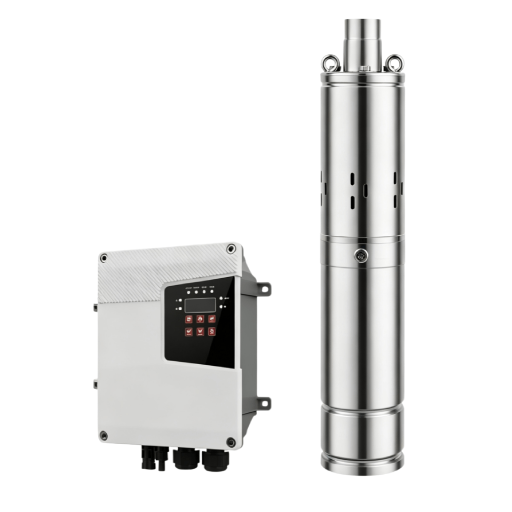
For deep-well applications, a solar submersible water pump is often a practical choice because the pump operates inside the water source. HUOPUSOLAR’s S3SS series, for example, is a 3-inch solar submersible screw pump with models rated for up to 180 m (591 ft) of maximum head.
That 180 m figure is the pump’s maximum head, not a guaranteed pumping depth of 180 m. The actual working depth depends on the full system design.
There is no single depth limit that applies to every solar water pump.
A well may be 200 m (656 ft) deep, but the water level may be much closer to the surface. In another well, the total depth may be lower while the operating water level is much deeper. The pump must respond to the actual lifting requirement, not simply the total depth of the well.
Several terms are important when evaluating a deep-well system:
1. Key Parameters for Deep-Well Solar Pump Selection
| Parameter | What it means | Why it matters |
|---|---|---|
| Well depth | Total depth from ground level to the bottom of the well | Does not equal pumping depth |
| Static water level | Water level when the well is not being pumped | Helps establish the starting water level |
| Dynamic water level | Water level while the pump is running | More useful for real operating conditions |
| Maximum head | Maximum head stated for the pump | Indicates the pump’s upper operating limit |
| Total head | Vertical lift plus system losses and required discharge pressure | A key sizing parameter |
| Flow rate | Water delivered over a given period | Must match the application requirement |
For example, a well could be 120 m (394 ft) deep while the operating water level is 60 m (197 ft) below ground. If the water must then be lifted to an elevated tank, you need to add that additional elevation. Pipe friction and other system losses also affect the required head.
This is why a 100 m (328 ft) deep well does not automatically require a 100 m head pump.
The actual pumping depth depends on several system conditions. Looking at only one number can lead to the wrong pump selection.
The total well depth tells you how deep the borehole is. It does not tell you where the water actually stands during operation.
The dynamic water level is particularly important because pumping can lower the water level. A pump selected only from the static water level may not perform as expected when the system is running.
A pump also needs to deliver enough water for the application.
A pump may reach a high head, but its flow rate can fall as head increases. For this reason, you should evaluate head and flow rate together, not choose a pump based only on its maximum head.
Total head represents the full lifting requirement of the system. In practical terms, you need to consider:
The result gives you a more realistic basis for pump selection.
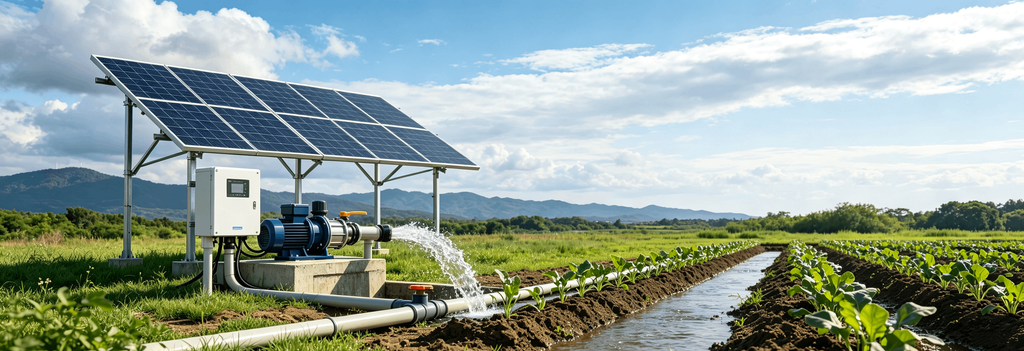
A solar water pump also depends on its solar power system and controller. The pump, controller, and available solar input need to work together under the expected site conditions.
A solar submersible water pump operates below the water level instead of relying on a surface pump to lift water from a deep source.
This makes the submersible design suitable for applications such as borehole water intake and deep-well water supply. The pump is installed inside the well, so the system is designed around the required head and flow rather than treating the application as a conventional suction-lift setup.
HUOPUSOLAR’s S3SS is a 3-inch (75 mm) solar submersible screw pump designed for applications that include domestic water supply, small-scale irrigation, and drinking water. It uses a brushless DC motor and an MPPT controller.
For a project that requires a solar submersible water pump, the key step is still matching the product to the actual site conditions.
The difference between head and well depth is one of the most important points in deep-well pump selection.
Well depth describes the physical depth of the well.
Head describes the work the pump needs to do to move water through the system.
These two values can be very different.
Consider a simplified example. A well is 120 m (394 ft) deep, but the dynamic water level is 60 m (197 ft) below the ground. The water then needs to reach a storage tank 15 m (49 ft) above ground. The pump must also overcome losses in the pipe system.
The required operating head will therefore be based on the full system, not just the 120 m well depth.
This is also why a pump rated at 180 m (591 ft) maximum head should not be described as a pump that can always lift water from a 180 m-deep well.
A practical selection process starts with the site, not the product name.
Before choosing a solar deep well pump, collect the following information:
Then compare the site requirements with the pump’s performance data.
The goal is to find a model that can provide the required flow rate at the required head under the expected operating conditions.
For B2B projects, this information is more useful to a pump supplier than the well depth alone. It allows the supplier to evaluate the application and recommend a suitable configuration.
HUOPUSOLAR currently lists the S3SS as a 3-inch solar-powered helical rotor submersible borehole pump. The series includes several models with different voltage, power, flow, and maximum head ratings.
2. HUOPUSOLAR S3SS Solar Submersible Pump Specifications
| Model | Power | Max. Flow Rate | Max. Head |
|---|---|---|---|
| S3SS0.5-28-12-80D | 80 W | 0.5 m³/h (2.2 GPM) | 28 m (92 ft) |
| S3SS1.2-56-24-120D | 120 W | 1.2 m³/h (5.3 GPM) | 56 m (184 ft) |
| S3SS1.2-77-36-210D | 210 W | 1.2 m³/h (5.3 GPM) | 77 m (253 ft) |
| S3SS1.7-109-48-500D | 500 W | 1.7 m³/h (7.5 GPM) | 109 m (358 ft) |
| S3SS2.0-150-96-750D | 750 W | 2.0 m³/h (8.8 GPM) | 150 m (492 ft) |
| S3SS2.2-180-110-1100D | 1100 W | 2.2 m³/h (9.7 GPM) | 180 m (591 ft) |
| S3SS2.2-180-150-1100D | 1100 W | 2.2 m³/h (9.7 GPM) | 180 m (591 ft) |
These figures are the maximum values listed for the models. They should not be treated as guaranteed flow and head at the same operating point.
The S3SS also includes an MPPT controller and is designed with a brushless DC motor. The product page lists a 2-year warranty.
You can review the full product specifications on the S3SS 3-inch solar submersible pump product page.
There is no fixed depth for every pump. The practical pumping depth depends on dynamic water level, required flow rate, total head, pipe losses, and the selected pump’s performance.
Yes. A solar submersible water pump can be used for deep-well and borehole applications. The pump should be selected according to the actual operating conditions rather than well depth alone.
Well depth is the total physical depth of the well. Pump head is the height and system resistance the pump must overcome to move water to the discharge point.
A submersible design is well suited to deep-well applications because the pump operates below the water level. Suitability still depends on the required head, flow rate, installation conditions, and pump performance.
Start with the well depth, dynamic water level, required flow rate, discharge elevation, pipe system, and available solar input. Then select a pump that can meet the required flow at the required head.
The depth of a well is only one part of solar pump selection. A suitable solar water pump must match the actual operating water level, required flow rate, total head, pipe losses, and solar input.
For deep-well applications, a solar submersible design can provide a practical solution. HUOPUSOLAR’s S3SS series currently includes models with maximum head ratings from 28 m (92 ft) to 180 m (591 ft), but the correct model depends on the actual application.
Before ordering, provide your well depth, dynamic water level, required flow rate, pipe length, and discharge conditions. Contact HUOPUSOLAR to discuss the pump configuration for your project.